The publication of the illustrated medical book initiated in 2003/4 in association with The Tambopata Reserve Society (TReeS) came to fruition and this valuable reservoir of indigenous medical knowledge in part accrued from the last Shaman, using local plants and traditional medicine, was distributed to all the families in the area. Work has now started on the translation of a second edition in Ese’Eja language and Bolivian dialect for distribution to the indigenous people on the Bolivian side of the border and this will be carried out in 2005. A report from Daniele Peluso at Kent University who supervised this project stated:
“Once the manuals were published we went straight to the communities to spend our last days there and to distribute the manuals. Everyone was extremely pleased and they especially appreciated that they are in the Ese Eja language and that their participation as authors and illustrators is acknowledged.”
Several photographs of this event were e-mailed to the Foundation. This book compliments the Cocina Rural book sponsored with ANIA last year to improve alimentation and nutrition in the communities.
Unfortunately, our pilot scheme at Sonene petered out into what was described as a ‘cultural crisis’. However, the concept of The Children’s Forest goes from strength to strength and a proposal was made to become involved with a show project 20kms. outside the local provincial capital of Puerto Maldonado. (see below)
As a result of these proposals the Foundation sponsored for 2004/5 new projects at Coriteni Tarso as well as Palma Real and this has proved notably successful. In reply to our proposal to fund the Ashininkas Project at Coriteni etc., Joaquin Leguia replied to my questions as follows:
Dear Patrick thanks for your email:
1. Let me say that your support to the bosque de los niños project has been very very important for us. And if this goes worldwide you can truely say its your project! I mean this from the heart. And we all thank you for this Patrick. No matter if the world bank gives us many thousands of dollars in the future. Your dollars mean so much more than the ones to come because you are the one who took the risk from the beginning!.
2. If Sonene is a mess now, please do not feel our investment there has been useless. The sonene seed has allow us to learn what to do, and not what to do. We will do all we can to keep our work there and I will keep you updated. Learning what no to do is sometimes much more important than otherwise.
3. The ashaninka project is truely a beautiful one. I will say is the first bosque de los niños that is created on its own and this deserves a lot of credit. I am sure that with US$ 10,000 we can help that BoNi there and do other complementary activities. I will draft a program for you in the next days.
4. Once we have the training center for the bosque de los niños project in Puerto maldonado in the future (year 2005) you could run a small program that may be can finance people from Sudan, Etiopia, India or other countries to go and learn in Madre de Dios how to build their own children´s land! in that way your whole investment makes much more sense and you can be next to us while this grows. This is just an idea!
thanks Patrick , un abrazo for you and the new Matthiesen family, Joaquin.
A formal proposal was received from Coriteni from ANIA and this is attached to this report. The project has since been a notable success.
The Children’s Forest Project at Coriteni has proved very successful thanks to the help of Marta and Marcia, both Ania Supervisors. Photographs show happy and excited children who are proving an attraction for eco-tourists to whom they manage to sell some local handicrafts, (see photos) thus boosting their modest revenues.
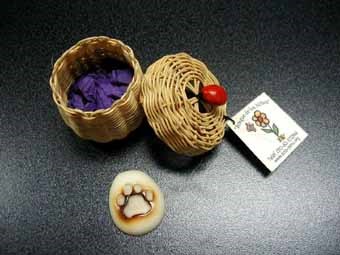
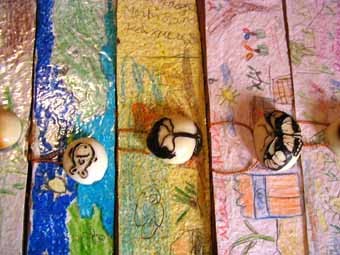
Forest handicrafts
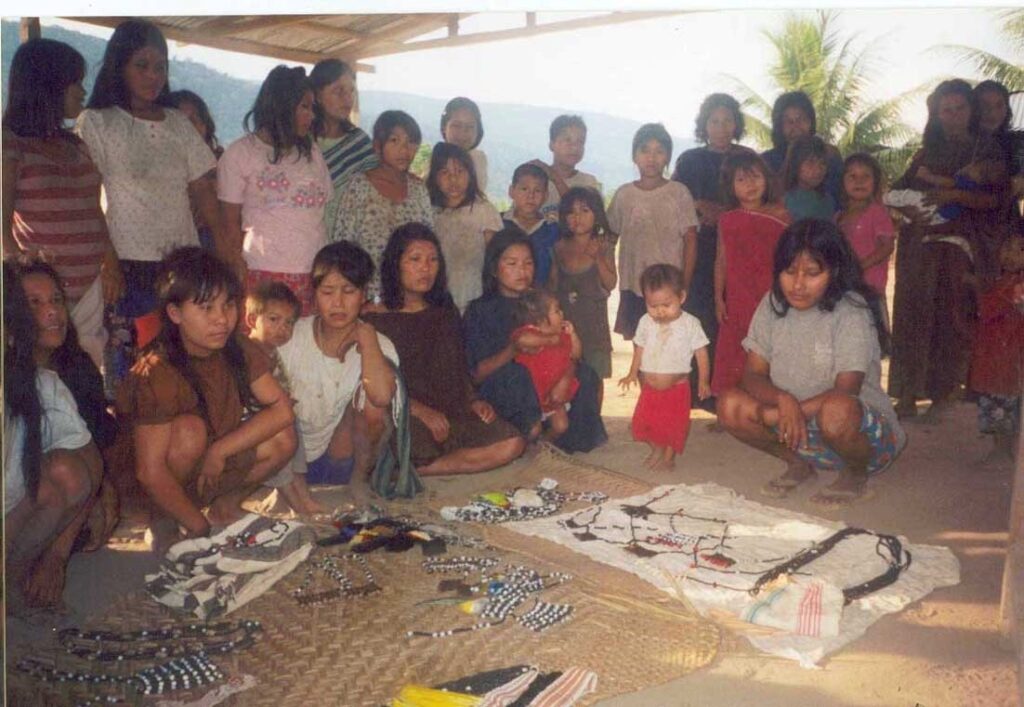
Children selling forest handicrafts
Later in the year The Foundation was successful in liaising with The National Geographic Magazine, Germany, who published a short report in their November/December 2004 issue on The Children’s Forest Project. This is the second article in The National Geographic and has generated a lot of interest in the project worldwide. In February 2005 The Children’s Forest Project was adopted by the Peruvian and Brazilian governments. Two pilot projects will be started in the Brazilian state of Acre, which is adjacent to Madre de Dios, four hours by dirt road from our locations in Peru.
Joaquin Leguia wrote:
‘Patrick, hi. I have been the last month fundraising for year 2005. As you know this is not an easy job. Nevertheless the children’s forest project has had a good welcome from many different sector within Peru and abroad like Brazil. There they will start BoNis in the State of Acre which is next to Madre de Dios (like 4 hours distance, 240 km, driving through a dirt road).
We recently published el “manual del bosque de los niños! I will scan the cover and send it to you. It is very nice. Your foundation is mentioned with the logo as one of the supporters!. Also as you know National Geographic will soon publish their children’s magazines in Croatia and Germany! .
P I will continuously send you information of our advances. I will have a girl working for us soon that will be in charge of creating and sending a monthly bulletin!
Un abrazo grande, Joaquin’
A proposal was also made to form a show project a few miles outside Puerto Maldonado the Peruvian provincial capital, which is now much visited by eco-tourism. This will be a much more complete Children’s Forest and we have been invited to participate in sponsoring the ‘model’ project which reproduces the El Bosque de los Ninos poster reproduced on the next page.
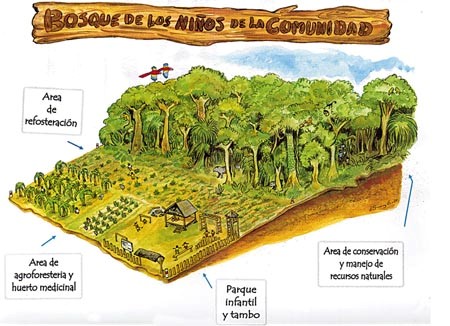
. A ‘user manual’ for establishing additional The Children’s Forest projects has also been produced by ANIA for use in other locations in Peru and Brazil and possibly additional countries in South America and The Matthiesen Foundation’s logo is reproduced on the cover.
Joaquin wrote:
‘Now we are working to build the Centro de Bosque de Niños in a beautiful piece of land that a local university has given us. We have started construction and we hope to finish and be operative to receive the first 15 people to be trained in July. As part of the Centro we are making model of the BoNi. Marcia is working on this. This will be ready in two months. There we will make the chacra, water system and all other innovative technologies that can be adapted. In this sense I think it would be great if you could come in august, September or October and stay some days with us to give us your ideas so we can further improve it. remember this place will be visited by hundreds of people that live in the woods and the idea is that they can take the technology home.’
During the year small donations were made as set out in the accounts below. It was also arranged that a sister establishment donate $2,500 to Tsunami victims through the Save the Children Fund.